
Selecting the right Florida MDU Internet Provider represents one of the most critical decisions property managers, HOA boards, and building owners face in 2026. With Florida’s explosive population growth and increasing demand for high-speed connectivity, multi-dwelling units require internet solutions that deliver reliability, speed, and scalability. Research indicates that residents now consider internet quality among their top three factors when choosing an apartment or condominium, making this decision essential for property value and tenant satisfaction.
This comprehensive guide explores everything you need to know about choosing a Florida MDU Internet Provider that meets the unique demands of the Sunshine State’s diverse residential landscape. From understanding the technical requirements of multi-dwelling units to navigating Florida’s specific regulatory environment, property stakeholders will gain actionable insights for making informed decisions. Whether you manage a beachfront high-rise in Miami or a suburban apartment complex in Orlando, the principles outlined here will help you secure the best connectivity solutions for your residents.
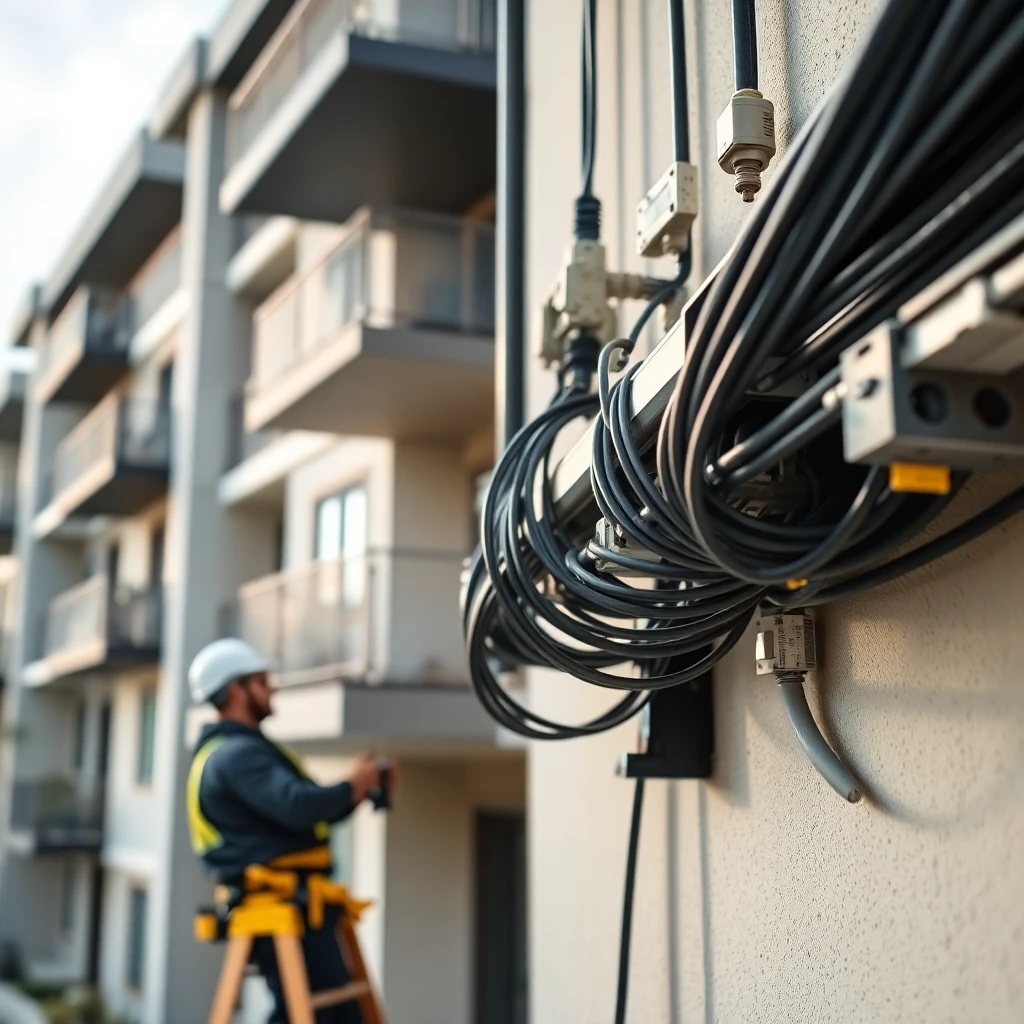
Understanding Florida MDU Internet Provider Services and Requirements
A Florida MDU Internet Provider specializes in delivering internet connectivity to multi-dwelling units, which include apartment buildings, condominiums, townhouse communities, and mixed-use residential developments. Unlike single-family home internet services, MDU providers must address the complex infrastructure requirements of buildings housing dozens or hundreds of individual units. Industry experts recommend understanding these distinctions before evaluating potential providers, and our guide on MDU WiFi services provides additional context on these specialized solutions.
The technical architecture of MDU internet differs significantly from traditional residential services. A qualified Florida MDU Internet Provider implements building-wide infrastructure that distributes connectivity from a central point of entry to each individual unit. This typically involves fiber-to-the-building configurations, internal distribution networks, and managed access points throughout common areas. The complexity increases with building size, age, and architectural design.
Key Infrastructure Components for MDU Connectivity
Successful MDU internet deployments require several critical infrastructure elements working in harmony. The primary components include the demarcation point where the provider’s network meets the building, vertical risers that carry connectivity between floors, horizontal distribution systems reaching individual units, and in-unit equipment providing the final connection to residents. Each component must be properly specified and installed by your Florida MDU Internet Provider to ensure optimal performance.
Florida’s unique environmental conditions add additional considerations to infrastructure planning. Hurricane-resistant installations, humidity-tolerant equipment, and lightning protection systems are essential requirements that experienced providers address during the planning phase. According to the Florida Division of Emergency Management, buildings with robust telecommunications infrastructure recover faster from weather events, making resilient design a priority for any MDU internet installation.
Bandwidth Requirements for Modern MDU Residents
Contemporary MDU residents demand substantially more bandwidth than previous generations. Remote work, streaming entertainment, smart home devices, and online gaming create concurrent demands that strain inadequate networks. Best practices suggest that a Florida MDU Internet Provider should provision minimum speeds of 500 Mbps per unit, with gigabit service increasingly becoming the standard expectation. Properties offering slower speeds risk losing residents to competitors with superior connectivity.
Why Choosing the Right Florida MDU Internet Provider Matters in 2026
The importance of selecting an excellent Florida MDU Internet Provider extends far beyond simple connectivity. Property values, resident retention rates, and competitive positioning all depend on delivering reliable, high-speed internet service. Recent studies indicate that properties with superior internet infrastructure command rental premiums of 3-7% compared to similar properties with standard connectivity options.
Florida’s competitive rental market makes differentiation essential for property success. With approximately 22 million residents and continued migration from other states, demand for quality housing remains strong throughout the state. However, residents have numerous options, and a substandard internet experience can drive them to competing properties. Your choice of Florida MDU Internet Provider directly impacts your ability to attract and retain quality tenants.
The Economic Impact of Quality Internet Service
Property managers who partner with a reliable Florida MDU Internet Provider report measurable improvements in key performance indicators. Resident satisfaction scores increase by an average of 15-20% when internet service meets or exceeds expectations. Maintenance requests related to connectivity issues decrease substantially, freeing staff to address other property needs. These operational improvements translate directly to improved net operating income.
The remote work revolution has permanently altered resident expectations regarding internet service. According to recent surveys, over 40% of Florida workers now work remotely at least part-time, making reliable home internet essential rather than optional. A Florida MDU Internet Provider that delivers consistent performance during business hours helps residents maintain productivity, contributing to their overall satisfaction with the property.
Competitive Advantages of Superior Connectivity
Properties featuring premium internet service from a reputable Florida MDU Internet Provider gain significant marketing advantages. Listings highlighting gigabit internet availability attract more qualified prospects than those with vague or absent internet information. Leasing agents report that internet quality frequently becomes a deciding factor when prospects compare otherwise similar properties.
Florida MDU Internet Provider Options: Local Market Insights for 2026
Understanding Florida’s unique market conditions helps property stakeholders make informed decisions when selecting a Florida MDU Internet Provider. The state’s geographic diversity, population distribution, and infrastructure development patterns create varying service availability across different regions. Major metropolitan areas typically enjoy multiple provider options, while suburban and rural locations may have more limited choices.
Florida Demographics and Internet Demand
Florida’s population has grown to approximately 23.5 million residents in 2026, representing continued expansion that drives demand for quality housing and connectivity. The median household income of approximately $67,000 supports resident willingness to pay for premium internet services. Property managers working with a Florida MDU Internet Provider should recognize that residents increasingly view high-speed internet as a utility rather than a luxury amenity.
The state’s diverse demographic composition influences internet usage patterns. Florida’s significant retiree population increasingly embraces technology for healthcare, communication, and entertainment. Younger residents and families demand bandwidth for education, work, and streaming services. A capable Florida MDU Internet Provider must address these varied needs with flexible service tiers and reliable performance across all usage scenarios.
Regional Variations in Florida MDU Internet Service
South Florida’s dense urban environment, including Miami-Dade, Broward, and Palm Beach counties, features the most competitive Florida MDU Internet Provider market. Multiple fiber providers compete for MDU contracts, often resulting in favorable terms for property owners. For property managers in this region, understanding Miami multifamily internet options provides valuable insights into local market dynamics. The region’s high-rise concentration and affluent demographics make it particularly attractive for providers investing in premium infrastructure.
Central Florida, anchored by Orlando and Tampa, represents the state’s fastest-growing region. The area’s technology sector expansion and young professional population create strong demand for advanced connectivity. Property managers in this region should seek a Florida MDU Internet Provider with demonstrated capacity for rapid deployment and scalable solutions that accommodate growth.
North Florida and the Panhandle present different challenges and opportunities. Lower population density means fewer provider options in some areas, but reduced competition can create partnership opportunities with providers seeking market expansion. Jacksonville’s substantial population supports multiple Florida MDU Internet Provider options, while smaller communities may require creative solutions.
Interesting Facts About Florida’s Connectivity Landscape
Florida ranks among the top five states for fiber optic infrastructure investment, with over $2 billion allocated for network expansion between 2024 and 2026. The state’s hurricane vulnerability has driven innovation in resilient network design, with many providers implementing redundant systems that maintain service during weather events. Florida’s tourism industry, generating over $100 billion annually, has accelerated infrastructure development that benefits residential properties as well.
The state hosts several major internet exchange points that improve connectivity performance for Florida-based users. Miami’s NAP of the Americas serves as a critical connection point for Latin American traffic, while Jacksonville’s facilities handle substantial domestic data flows. These infrastructure advantages benefit residents served by a well-connected Florida MDU Internet Provider.
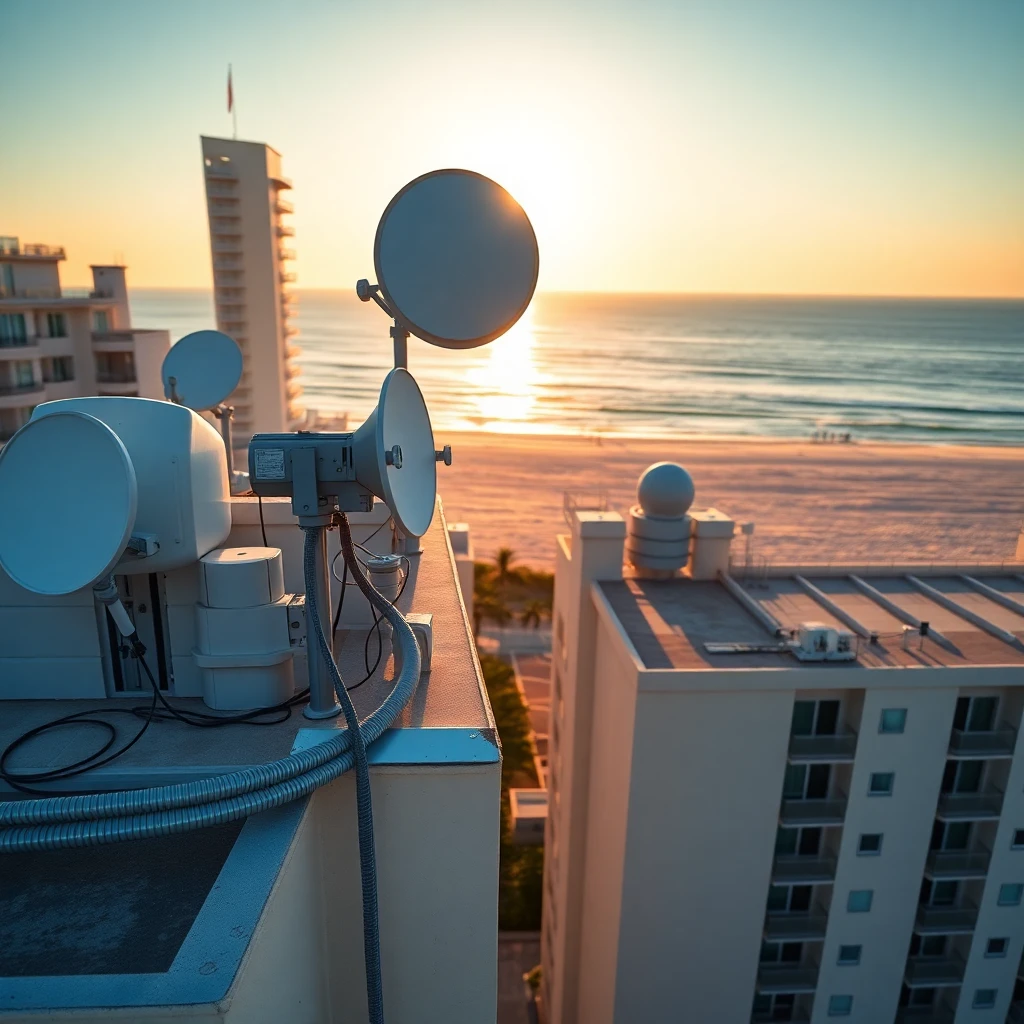
Essential Features to Evaluate in a Florida MDU Internet Provider
Selecting the optimal Florida MDU Internet Provider requires systematic evaluation of multiple factors. Property stakeholders should develop comprehensive criteria that address technical capabilities, service quality, financial terms, and long-term partnership potential. The following framework helps organize this evaluation process.
Technical Capabilities and Infrastructure
The foundation of any successful MDU internet deployment begins with robust technical capabilities. A qualified Florida MDU Internet Provider should demonstrate expertise in fiber optic technology, which delivers the fastest and most reliable connectivity available. Providers still relying primarily on coaxial cable or DSL technology may struggle to meet contemporary bandwidth demands, particularly in larger properties. Our comprehensive guide on fiber internet for multi family buildings explores these technical considerations in greater detail.
Network architecture matters significantly for MDU applications. Providers should explain their approach to building distribution, including whether they utilize dedicated fiber to each unit or shared infrastructure with managed bandwidth allocation. The best Florida MDU Internet Provider options offer symmetric upload and download speeds, which prove essential for residents who work remotely or create content.
Service Level Agreements and Support
Contractual commitments reveal much about a provider’s confidence in their service quality. A reputable Florida MDU Internet Provider should offer service level agreements specifying uptime guarantees, typically 99.9% or higher for quality providers. These agreements should include remedies for service failures, such as credits or fee reductions when performance falls below promised levels.
Support responsiveness directly impacts resident satisfaction and property management workload. Evaluate potential providers based on their support hours, response time commitments, and escalation procedures. The ideal Florida MDU Internet Provider offers 24/7 technical support with dedicated account management for property-level issues. On-site service response times should be measured in hours rather than days for critical problems.
Financial Considerations and Contract Terms
Understanding the financial structure of MDU internet agreements helps property stakeholders negotiate favorable terms. Common arrangements include bulk service agreements, where the property pays a fixed monthly fee for all units, and retail models, where residents contract directly with the provider. Each approach offers advantages depending on property characteristics and management preferences. Property owners exploring bulk arrangements should review our guide on bulk WiFi provider solutions for comprehensive insights.
A Florida MDU Internet Provider offering bulk agreements typically provides lower per-unit costs in exchange for guaranteed revenue. This model simplifies resident onboarding and ensures universal connectivity throughout the property. However, it requires the property to assume some financial risk if occupancy fluctuates. Retail models transfer this risk to the provider but may result in inconsistent service adoption across units.
Implementation Best Practices for Florida MDU Internet Projects
Successful implementation of MDU internet service requires careful planning and coordination between property stakeholders and the selected Florida MDU Internet Provider. The following best practices help ensure smooth deployments that minimize disruption while maximizing service quality.
Pre-Installation Planning and Assessment
Comprehensive site assessment forms the foundation of successful MDU internet deployment. Your chosen Florida MDU Internet Provider should conduct thorough surveys documenting existing infrastructure, identifying installation challenges, and developing detailed project plans. This assessment should include evaluation of telecommunications rooms, riser pathways, and in-unit wiring conditions.
Florida’s building codes and HOA regulations add complexity to many installations. Properties in coastal areas may face additional requirements related to hurricane protection and building envelope integrity. An experienced Florida MDU Internet Provider understands these requirements and incorporates compliance into project planning. Failure to address regulatory requirements can result in costly delays and rework.
Resident Communication and Transition Management
Effective communication with residents throughout the implementation process prevents misunderstandings and builds enthusiasm for new services. Property managers should coordinate with their Florida MDU Internet Provider to develop communication plans covering project timelines, temporary service impacts, and activation procedures. Residents appreciate advance notice of any disruptions and clear instructions for accessing new services.
Transition periods require particular attention when replacing existing internet services. Residents may need to return equipment to previous providers, schedule installation appointments, and update network configurations on their devices. A Florida MDU Internet Provider committed to customer satisfaction provides resources and support to simplify these transitions for residents.
Quality Assurance and Performance Verification
Professional installation should include comprehensive testing to verify performance meets specifications. Your Florida MDU Internet Provider should document speed tests, latency measurements, and signal quality readings for each unit. This baseline data proves valuable for troubleshooting future issues and demonstrating service quality to prospective residents.
Ongoing monitoring helps identify and resolve problems before they impact residents. Leading providers offer management portals that allow property staff to view network status, track usage patterns, and submit service requests. These tools help property managers maintain service quality without requiring deep technical expertise.
[IMAGE: Technical team performing quality assurance testing on newly installed Florida MDU Internet infrastructure]
Common Challenges and Solutions with Florida MDU Internet Provider Services
Even well-planned MDU internet deployments encounter challenges that require creative solutions. Understanding common issues helps property stakeholders prepare appropriate responses and set realistic expectations for their Florida MDU Internet Provider partnerships.
Infrastructure Limitations in Older Buildings
Florida’s building stock includes many properties constructed before modern telecommunications standards existed. These older buildings may lack adequate pathways for new cabling, have outdated electrical systems, or feature architectural elements that complicate installation. A resourceful Florida MDU Internet Provider offers solutions for these challenges, including wireless distribution systems, surface-mounted conduit, and creative routing approaches.
Historic properties and those with strict HOA aesthetic requirements present additional considerations. Providers experienced with Florida’s diverse property types understand how to achieve connectivity goals while respecting architectural integrity and community guidelines. Property managers should discuss these constraints during provider evaluation to ensure proposed solutions align with property requirements.
Weather-Related Service Considerations
Florida’s weather patterns, including hurricane season from June through November, create unique reliability challenges for internet services. A Florida MDU Internet Provider serving the state should demonstrate robust disaster preparedness, including redundant network paths, backup power systems, and rapid restoration capabilities. Request information about provider performance during recent storm events to assess their actual resilience.
Lightning strikes pose particular risks to telecommunications equipment in Florida, which experiences more lightning than any other state. Quality providers install appropriate surge protection throughout their infrastructure and maintain spare equipment for rapid replacement when damage occurs. According to the National Weather Service, Florida averages over 1.4 million lightning strikes annually, making protection essential.
Addressing Resident Complaints and Service Issues
Even excellent Florida MDU Internet Provider services occasionally generate resident complaints. Property managers should establish clear procedures for documenting issues, communicating with providers, and following up on resolutions. Maintaining detailed records helps identify patterns that may indicate systemic problems requiring provider attention.
Common complaint categories include speed inconsistencies, intermittent connectivity, and equipment problems. Working with your provider to understand typical causes and solutions enables property staff to provide helpful initial responses. Many issues resolve through simple troubleshooting steps that staff can guide residents through, reducing the need for service calls.
Future Trends in Florida MDU Internet Provider Services
The MDU internet landscape continues evolving rapidly, with new technologies and service models emerging regularly. Property stakeholders benefit from understanding these trends when negotiating contracts and planning infrastructure investments with their Florida MDU Internet Provider.
Emerging Technologies and Capabilities
Multi-gigabit services are becoming increasingly available from leading Florida MDU Internet Provider companies. Properties installing infrastructure today should ensure compatibility with speeds of 2 Gbps or higher, even if current service tiers are lower. This future-proofing protects infrastructure investments and positions properties competitively as resident expectations continue rising.
Managed WiFi services represent a growing trend in MDU connectivity. Rather than providing wired connections to each unit, some providers now offer building-wide WiFi networks that residents access throughout the property. This approach simplifies resident onboarding and enables seamless connectivity in common areas. However, it requires careful design to ensure adequate coverage and capacity.
Smart Building Integration Opportunities
Modern MDU properties increasingly incorporate smart building technologies that depend on reliable internet connectivity. Access control systems, package lockers, common area displays, and building management systems all require network access. A forward-thinking Florida MDU Internet Provider offers solutions that address both resident and property operational needs through integrated network services.
Energy management systems represent a particularly valuable application of smart building connectivity. Florida’s warm climate makes air conditioning a significant operating expense for MDU properties. Connected thermostats and energy monitoring systems can reduce costs while improving resident comfort. These systems require reliable network connectivity that your Florida MDU Internet Provider should accommodate.
Frequently Asked Questions About Florida MDU Internet Provider Services
What distinguishes a Florida MDU Internet Provider from standard residential internet services?
A Florida MDU Internet Provider specializes in delivering connectivity to multi-dwelling units through building-wide infrastructure rather than individual service connections. These providers design systems that efficiently distribute bandwidth across dozens or hundreds of units while maintaining consistent performance. They also offer property-level management tools and bulk pricing structures unavailable from standard residential services.
How long does typical MDU internet installation take in Florida properties?
Installation timelines vary based on property size, existing infrastructure, and provider capabilities. Small properties with favorable conditions may complete installation within 2-4 weeks, while larger or more complex buildings require 2-3 months. Your Florida MDU Internet Provider should provide detailed project timelines during the proposal phase, including milestones for key installation phases.
Can residents choose their own internet provider in MDU properties?
Federal regulations generally prohibit exclusive service agreements that prevent residents from selecting alternative providers. However, practical considerations often limit options, as most providers are unwilling to install infrastructure serving only a few units in a building. Many properties find that partnering with a single Florida MDU Internet Provider delivers the best combination of service quality and cost efficiency while remaining compliant with regulations.
What speeds should Florida MDU properties offer residents in 2026?
Industry experts recommend minimum speeds of 500 Mbps for competitive MDU properties, with gigabit service increasingly becoming the standard expectation. Properties targeting premium market segments should consider multi-gigabit options where available. Your Florida MDU Internet Provider can assess current resident usage patterns and recommend appropriate service tiers for your specific property.
How do hurricane events affect MDU internet services in Florida?
Service impacts during hurricanes depend significantly on provider infrastructure resilience and storm severity. Quality Florida MDU Internet Provider companies implement redundant systems and rapid restoration procedures that minimize outages. Property managers should discuss disaster preparedness during provider evaluation and request information about historical performance during major weather events.
[IMAGE: Florida MDU Internet Provider customer service representative assisting property manager with connectivity questions]
Key Takeaways for Selecting Your Florida MDU Internet Provider
- Prioritize fiber infrastructure when evaluating Florida MDU Internet Provider options, as fiber delivers superior speed, reliability, and future scalability compared to legacy technologies.
- Evaluate provider experience with Florida’s unique conditions, including hurricane preparedness, lightning protection, and familiarity with state and local regulations.
- Negotiate comprehensive service agreements that include uptime guarantees, support response commitments, and clear remedies for service failures.
- Plan for future needs by selecting infrastructure and providers capable of supporting multi-gigabit speeds and smart building integration.
- Communicate proactively with residents throughout implementation to build enthusiasm and ensure smooth transitions to new services.
Conclusion: Making the Right Florida MDU Internet Provider Decision
Selecting the optimal Florida MDU Internet Provider requires balancing technical capabilities, service quality, financial terms, and long-term partnership potential. Property stakeholders who invest time in thorough evaluation and negotiation position their properties for success in Florida’s competitive rental market. The connectivity decisions made today will impact property performance for years to come.
As Florida’s population continues growing and resident expectations for internet service keep rising, the importance of quality MDU connectivity will only increase. Properties partnering with capable Florida MDU Internet Provider companies gain competitive advantages in attracting residents, maintaining satisfaction, and supporting property values. Take the time to evaluate options carefully, ask detailed questions, and select a provider committed to long-term partnership success.
Learn more about comprehensive MDU internet solutions and discover how the right connectivity partner can transform your property’s resident experience. For additional insights on property technology integration, explore our resources designed specifically for Florida property managers and owners.
References
- Florida Division of Emergency Management – Disaster Preparedness Resources: https://www.floridadisaster.org/
- National Weather Service – Lightning Safety Information: https://www.weather.gov/safety/lightning