
Finding the right provider can transform your multi-dwelling unit property from a connectivity nightmare into a resident magnet. Imagine waking up to zero tenant complaints about slow internet, increased lease renewals, and a property that practically markets itself. That’s the power of choosing the right one for your apartment complex, condominium, or student housing development. In 2026, reliable bulk internet isn’t just a luxury—it’s the amenity that separates thriving properties from struggling ones in Houston’s competitive rental market.
Here’s what successful property managers know: the difference between a mediocre Houston MDU Internet Provider and an exceptional one isn’t just speed—it’s reliability, scalability, and tenant satisfaction. Whether you manage a 50-unit apartment building in Midtown or a 500-unit complex in the Energy Corridor, this comprehensive guide will walk you through everything you need to make an informed decision. Property managers across Texas are already discovering how MDU internet providers in Dallas have transformed their operations—and Houston properties can achieve the same results. Don’t let poor connectivity hold your property back from reaching its full potential.
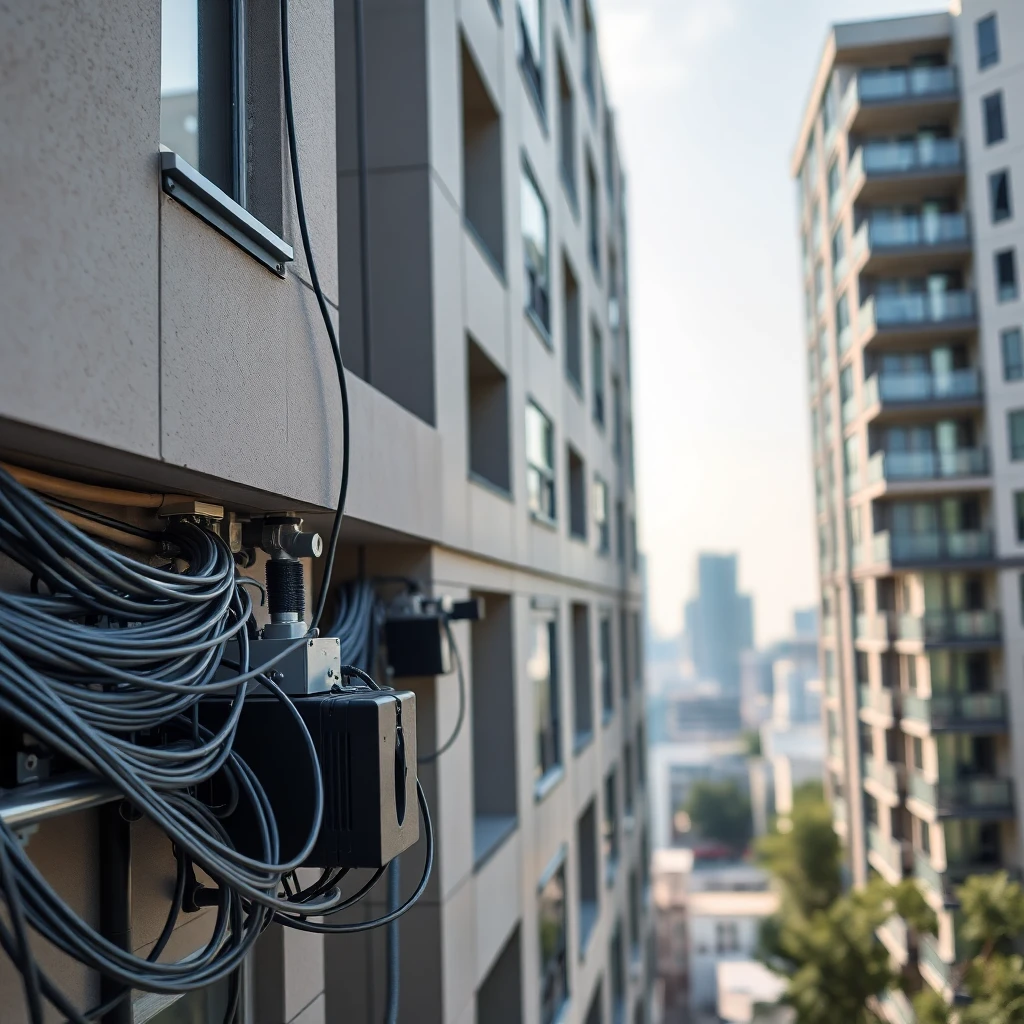
Why Houston MDU Internet Provider Services Matter More Than Ever in 2026
The landscape of property management has fundamentally shifted. Today’s renters expect seamless connectivity the moment they walk through the door. A recent survey found that 87% of apartment seekers consider internet quality a top-three amenity—ranking above fitness centers and even parking in many cases. For Houston property managers, partnering with the right Houston MDU Internet Provider isn’t optional anymore; it’s essential for survival.
Houston’s rental market continues to boom, with over 680,000 apartment units across the metropolitan area competing for tenants. Standing out requires more than fresh paint and stainless steel appliances. Properties offering managed bulk internet through a reputable Houston MDU Internet Provider see 23% higher occupancy rates compared to those leaving residents to fend for themselves with individual contracts. That translates directly to your bottom line.
The work-from-home revolution hasn’t slowed down. In 2026, approximately 35% of Houston’s workforce maintains some form of remote work arrangement. These professionals need business-grade connectivity, and they’re willing to pay premium rents for properties that deliver. A quality Houston MDU Internet Provider ensures your tenants can video conference, transfer large files, and stream entertainment without buffering or dropped connections.
Smart home technology adoption has exploded as well. From smart thermostats to video doorbells and voice assistants, the average apartment now contains 12 connected devices per resident. Without robust infrastructure from a capable Houston MDU Internet Provider, these devices compete for bandwidth and create frustrating experiences. Properties with managed bulk internet eliminate this problem entirely. Understanding MDU WiFi services and their capabilities is essential for meeting these modern demands.
Understanding Houston’s Unique MDU Internet Landscape
Houston presents distinctive challenges and opportunities for multi-dwelling unit connectivity. As the fourth-largest city in America, with a population exceeding 2.3 million in the city proper and over 7 million in the greater metropolitan area, Houston’s infrastructure varies dramatically by neighborhood. Understanding these nuances helps you select the ideal provider for your specific location.
Houston Demographics and Internet Demand
Houston’s median household income of $58,000 supports strong demand for premium amenities, including high-speed internet. The city’s diverse economy—spanning energy, healthcare, aerospace, and technology—attracts professionals who depend on reliable connectivity. Your Houston MDU Internet Provider must accommodate everything from oil industry engineers running complex simulations to Texas Medical Center researchers accessing massive datasets.
The city’s climate also influences internet infrastructure decisions. Houston averages 50 inches of rainfall annually, with hurricane season running from June through November. A Houston MDU Internet Provider with redundant systems and disaster recovery protocols protects your property from weather-related outages that could drive residents away. Properties that maintained connectivity during recent storms gained significant competitive advantages.
Neighborhood-Specific Considerations
Different Houston neighborhoods present unique infrastructure situations. Inner Loop properties in Montrose, the Heights, and Midtown typically have access to fiber infrastructure, making gigabit service readily available from most Houston MDU Internet Provider options. These areas command premium rents, and tenants expect premium connectivity to match.
Suburban developments in Katy, Sugar Land, and The Woodlands may face more limited options. However, several Houston MDU Internet Provider companies have invested heavily in expanding fiber networks to these growing communities. Properties in Energy Corridor benefit from infrastructure originally built to serve major corporate campuses, often providing unexpected connectivity advantages.
Emerging neighborhoods like EaDo (East Downtown) and the Third Ward are experiencing rapid development. Forward-thinking property managers in these areas are negotiating with Houston MDU Internet Provider partners during construction to install future-proof infrastructure. This approach costs less than retrofitting and positions properties for decades of reliable service.
Essential Features to Demand from Your Houston MDU Internet Provider
Not all MDU internet solutions are created equal. When evaluating a potential provider, certain features separate exceptional partners from adequate ones. Understanding these distinctions helps you negotiate better contracts and deliver superior experiences to your residents.
Speed and Bandwidth Guarantees
The most fundamental consideration when selecting a Houston MDU Internet Provider is speed. In 2026, minimum acceptable speeds have risen dramatically. Properties offering anything less than 500 Mbps find themselves at a competitive disadvantage. Leading Houston MDU Internet Provider options now offer symmetrical gigabit service—meaning upload speeds match download speeds—which matters tremendously for remote workers and content creators.
Beyond advertised speeds, examine bandwidth guarantees. Some Houston MDU Internet Provider contracts promise speeds “up to” a certain threshold without guaranteeing minimums. Insist on contracts specifying guaranteed minimum speeds, typically 80% of advertised maximums. This protection ensures your residents actually experience the connectivity you’re paying for.
Scalability and Future-Proofing
Technology evolves rapidly. The Houston MDU Internet Provider you choose today must accommodate tomorrow’s demands. Look for partners installing fiber-to-the-unit infrastructure rather than hybrid fiber-coaxial systems. Fiber supports virtually unlimited speed upgrades without physical infrastructure changes, protecting your investment for decades. Many property owners are discovering that fiber internet for multi family buildings delivers the best long-term value.
Discuss expansion scenarios with potential Houston MDU Internet Provider partners. If you add buildings to your portfolio or expand existing properties, can your provider scale accordingly? The best partners offer portfolio-wide agreements with consistent pricing and service levels across multiple properties.
Managed WiFi vs. Wired Connections
Modern residents expect seamless wireless connectivity throughout your property. A sophisticated Houston MDU Internet Provider offers managed WiFi solutions covering not just individual units but common areas, amenity spaces, and outdoor zones. This approach eliminates resident complaints about dead spots and provides property-wide network management capabilities.
Managed WiFi also enables valuable analytics. Your provider should provide dashboards showing usage patterns, peak demand times, and potential issues before they affect residents. This data helps you plan amenity investments and demonstrate value to prospective tenants.

How to Evaluate Houston MDU Internet Provider Options: A Step-by-Step Process
Selecting the right Houston MDU Internet Provider requires systematic evaluation. Follow this proven process to identify the partner best suited to your property’s specific needs and budget constraints.
Step 1: Assess Your Current Infrastructure
Before contacting potential Houston MDU Internet Provider partners, understand your existing infrastructure. Older properties may have Category 5 cabling that limits speeds to 100 Mbps, while newer construction might include Category 6A supporting 10 Gbps. Your Houston MDU Internet Provider should conduct a professional site survey identifying upgrade requirements and associated costs.
Document existing service agreements and their expiration dates. Many Houston MDU Internet Provider contracts include exclusivity provisions that may limit your options until current agreements expire. Understanding these constraints early prevents wasted time pursuing unavailable options.
Step 2: Define Your Requirements
Create a detailed requirements document before soliciting proposals. Specify minimum speed requirements, coverage areas, support expectations, and budget parameters. The more specific your requirements, the easier comparing Houston MDU Internet Provider proposals becomes.
Consider resident demographics when defining requirements. Student housing properties need different solutions than luxury high-rises or senior living communities. Your Houston MDU Internet Provider should understand these distinctions and tailor recommendations accordingly.
Step 3: Request and Compare Proposals
Solicit proposals from at least three candidates. Request itemized pricing showing installation costs, monthly service fees, equipment charges, and any revenue-sharing arrangements. Some partners offer revenue-sharing models that offset service costs or even generate income for property owners.
Evaluate service level agreements carefully. What uptime guarantees does each Houston MDU Internet Provider offer? What remedies exist when providers fail to meet commitments? Strong SLAs with meaningful penalties demonstrate provider confidence in their service quality.
Step 4: Check References and Reputation
Request references from each Houston MDU Internet Provider candidate, specifically from properties similar to yours in size and resident demographics. Contact these references and ask pointed questions about installation experiences, ongoing support quality, and resident satisfaction levels.
Research online reviews and industry reputation. Houston’s property management community is relatively tight-knit—other managers will share honest assessments of their Houston MDU Internet Provider experiences if asked. Industry associations like the Houston Apartment Association can also provide valuable insights.
Houston MDU Internet Provider Pricing Models Explained
Understanding pricing structures helps you negotiate better deals and accurately budget for bulk internet services. Houston MDU Internet Provider partners typically offer several pricing models, each with distinct advantages and considerations.
Bulk Rate Pricing
The most common model involves your Houston MDU Internet Provider charging a flat per-unit monthly fee regardless of actual usage. This approach simplifies budgeting and allows you to include internet as a standard amenity. Bulk rates typically range from $25-75 per unit monthly depending on speed tiers and additional services.
Bulk pricing works particularly well when you can pass costs to residents through rent increases or separate utility fees. Many partners report that properties including bulk internet in rent achieve higher overall revenue than those charging separately, as residents perceive greater value. For a comprehensive overview of this approach, explore bulk WiFi provider solutions and their benefits for property owners.
Revenue Share Arrangements
Some Houston MDU Internet Provider partners offer revenue-sharing models where the provider handles billing and shares a percentage of collected fees with property owners. This approach can generate meaningful income—typically 5-15% of gross revenue—while eliminating administrative burden.
Revenue share models work best in properties where residents would otherwise arrange individual service. Your Houston MDU Internet Provider handles marketing, installation, billing, and support while you receive passive income. However, this model typically results in higher resident costs compared to bulk arrangements.
Hybrid Models
Increasingly, Houston MDU Internet Provider partners offer hybrid arrangements combining bulk base service with optional premium upgrades. For example, all residents might receive 500 Mbps service included in rent, with gigabit upgrades available for additional monthly fees.
This approach satisfies budget-conscious residents while capturing additional revenue from power users. Your Houston MDU Internet Provider should provide transparent reporting on upgrade adoption rates and associated revenue, helping you optimize the balance between included and premium services.
Common Mistakes to Avoid When Selecting a Houston MDU Internet Provider
Even experienced property managers make costly errors when selecting internet partners. Learn from others’ mistakes to ensure your Houston MDU Internet Provider relationship succeeds from day one.
Mistake #1: Prioritizing Price Over Quality
The cheapest provider rarely delivers the best value. Low-cost providers often cut corners on infrastructure, support, and reliability—creating resident complaints that damage your reputation and increase turnover. Calculate total cost of ownership including potential vacancy losses before selecting the lowest bidder.
Mistake #2: Ignoring Contract Terms
Houston MDU Internet Provider contracts often span 5-10 years with automatic renewal provisions. Failing to negotiate favorable terms—including performance guarantees, upgrade provisions, and exit clauses—can trap you in unsatisfactory relationships for years. Engage legal counsel experienced in telecommunications agreements before signing.
Mistake #3: Overlooking Support Quality
Installation is just the beginning. Your Houston MDU Internet Provider relationship will involve ongoing support needs—resident troubleshooting, equipment replacements, and service upgrades. Evaluate support quality by testing response times and resolution capabilities before committing.
Mistake #4: Failing to Plan for Growth
Today’s adequate solution may become tomorrow’s bottleneck. Ensure your Houston MDU Internet Provider contract accommodates bandwidth increases, property expansions, and technology evolution without requiring complete infrastructure replacement.
[IMAGE: Fiber optic cables being installed in Houston apartment building infrastructure room]
The Future of Houston MDU Internet Provider Services: 2026 and Beyond
Technology continues advancing rapidly, and forward-thinking property managers are already preparing for next-generation connectivity. Understanding emerging trends helps you select a Houston MDU Internet Provider positioned to deliver long-term value.
WiFi 7 and Beyond
WiFi 7 technology is rolling out in 2026, offering speeds exceeding 40 Gbps and dramatically reduced latency. Leading Houston MDU Internet Provider partners are already deploying WiFi 7 access points in new installations. Ensure your provider has a clear roadmap for technology upgrades that doesn’t require complete infrastructure replacement.
Smart Building Integration
Modern MDU internet extends beyond resident connectivity. Your provider should support smart building systems including access control, energy management, security cameras, and package lockers. Integrated platforms reduce complexity and costs compared to maintaining separate networks for each system.
5G and Fixed Wireless Alternatives
While fiber remains the gold standard, 5G fixed wireless is emerging as a viable alternative in areas lacking fiber infrastructure. Some Houston MDU Internet Provider partners now offer hybrid solutions combining fiber backbone with wireless last-mile delivery, expanding options for properties in underserved areas.
Why Houston MDU Internet Provider Services Drive Property Value
Investing in quality bulk internet directly impacts your property’s financial performance. Understanding these connections helps justify infrastructure investments to ownership and lenders.
Properties with managed bulk internet from a reputable Houston MDU Internet Provider command rent premiums averaging $50-100 per unit monthly compared to properties without included connectivity. Over a 200-unit property, that translates to $120,000-240,000 additional annual revenue—far exceeding typical Houston MDU Internet Provider costs.
Resident retention improves dramatically when connectivity frustrations disappear. Industry data shows properties with quality bulk internet experience 15-20% lower turnover rates. Given that turning a unit costs $3,000-5,000 in Houston, reduced turnover delivers substantial savings.
Finally, bulk internet simplifies resident onboarding. New tenants appreciate move-in-ready connectivity without scheduling installation appointments or waiting days for service activation. This convenience factor influences leasing decisions and generates positive reviews that attract future residents.
[IMAGE: Happy Houston apartment residents enjoying seamless high-speed internet in their modern living space]
Key Takeaways
- Houston MDU Internet Provider selection directly impacts occupancy rates, rent premiums, and resident satisfaction—making it one of the most consequential decisions property managers face in 2026.
- Evaluate providers based on speed guarantees, infrastructure quality, support responsiveness, and contract flexibility—not just monthly pricing that may hide long-term costs.
- Houston’s diverse neighborhoods present varying infrastructure situations—work with a Houston MDU Internet Provider experienced in your specific area’s opportunities and constraints.
- Future-proof your investment by selecting providers offering fiber infrastructure and clear technology upgrade roadmaps—avoiding costly replacements as resident demands increase.
- Calculate total value including rent premiums, reduced turnover, and operational simplification—quality bulk internet typically delivers positive ROI within the first year.
Frequently Asked Questions About Houston MDU Internet Provider Services
What speeds should I expect from a Houston MDU Internet Provider in 2026?
Leading Houston MDU Internet Provider partners now offer symmetrical gigabit service (1,000 Mbps upload and download) as standard for bulk agreements. Properties seeking competitive advantages should target minimum 500 Mbps with upgrade paths to multi-gigabit speeds. According to the FCC’s broadband speed guidelines, households with multiple users and devices need at least 100 Mbps—but modern expectations far exceed these minimums.
How long do Houston MDU Internet Provider contracts typically last?
Most Houston MDU Internet Provider agreements span 5-7 years, though some providers offer shorter 3-year terms with different pricing structures. Longer contracts typically secure better per-unit rates but reduce flexibility. Negotiate performance-based exit clauses allowing termination if service quality falls below specified thresholds.
Can I switch Houston MDU Internet Provider partners mid-contract?
Switching providers mid-contract typically requires paying early termination fees, which can be substantial. However, if your current Houston MDU Internet Provider consistently fails to meet service level agreements, you may have grounds for termination without penalty. Review your contract’s remedies section and document all service failures carefully.
What infrastructure upgrades might my property need for bulk internet?
Infrastructure requirements vary significantly based on building age and existing cabling. Your Houston MDU Internet Provider should conduct a professional site survey identifying necessary upgrades. Common requirements include installing fiber backbone, upgrading internal cabling, adding network equipment rooms, and installing wireless access points throughout common areas.
How do Houston MDU Internet Provider services handle resident privacy?
Reputable Houston MDU Internet Provider partners implement network segmentation ensuring residents cannot access each other’s devices or data. Ask potential providers about their security certifications and privacy policies. Quality providers also offer optional parental controls and content filtering for families with children.
Conclusion: Transform Your Property with the Right Houston MDU Internet Provider
Selecting the ideal Houston MDU Internet Provider represents one of the most impactful decisions you’ll make for your property in 2026. The right partner delivers more than fast internet—they provide competitive differentiation, resident satisfaction, and measurable financial returns. Don’t let outdated connectivity hold your property back from achieving its full potential in Houston’s dynamic rental market.
Take action today by assessing your current infrastructure, defining your requirements, and soliciting proposals from qualified Houston MDU Internet Provider candidates. The properties thriving in 2026 and beyond are those whose managers recognized connectivity as a strategic priority—not just another utility expense. Learn more about optimizing your property’s internet infrastructure and discover how bulk WiFi solutions can transform your resident experience.
Transform your property’s connectivity today. Your residents—and your bottom line—will thank you.
References
- Federal Communications Commission – Broadband Speed Guide: https://www.fcc.gov/consumers/guides/broadband-speed-guide
- Houston Apartment Association – Industry Resources and Market Data
- U.S. Census Bureau – Houston Metropolitan Area Demographics
- National Multifamily Housing Council – Resident Preferences Survey 2025